Understanding Visualization Skills in Design/Art
One of the skills that doesn’t really get discussed much in art and design are visualization skills. What are visualization skills? How can this help people in the creative field?
When people want to draw or design something, they generally start off doing different things to get their “creative juices” flowing. This could be listening to music, looking at other designs or art, or just doodling on a piece of paper.
These are great ways to find ideas, but why and how do your ideas come from these various activities? The music or art doesn’t tell you, “Hey John/Jill, you need to draw a line there”. It just inspires you to come up with something else.
Doing design and art myself, I am very interested in the idea process and seeing the best way I can develop and improve this important skill set. Do a google search on visualization skills to see a lot of great resources and articles on the subject.
I have spent some good time researching the subject and will synthesize some of the important concepts I have learned along with interjecting my own views.
Ability Level
Let me just start off by saying that you have the ability to vividly see images in your mind. If you don’t believe me, think back to the last time you had a dream. It could have even been a nightmare even.
Not only did you see the images in your mind, but you actually believed that they were really happening. You might have woken up scared stiff - or even wished you could have remained dreaming a little longer. This powerful part of your brain is something just about everyone has (my apologies to the people that have never dreamed before).
Dreams
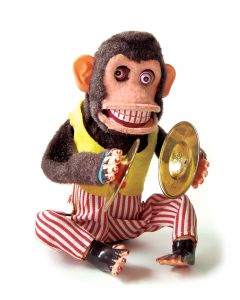
There are a few theories to how dreaming works, but the one I believe that is the most accurate is the 1973 theory by Allan Hobson and Robert McCarley. They believe that the brain has random electrical impulses that fire in our brains. These electrical impulses pull information from our memories, feelings, emotions, vision, auditory, and other sense - pretty much everything.
There isn’t a set pattern that the electrical impulses follow. It is completely random. This helps explain the chaotic nature of dreams. Totally free from structure and order.
The real question is how can you tap into that part of your brain without being asleep. There is no better creative tool than having every aspect of your life have the potential to be part of your art or story.
Ideas
The best ideas seem to come when you are doing other things that aren’t directly related to what you want to accomplish. Listening to music, reading a book, playing a video game, etc.
When you focus your mind on other areas, you forget about all of the technical rules of what you were doing before. These other more relaxing areas have there own rules. Melody, story pacing, leveling up, etc.
When you do these other “activities” for a while, your mind begins filling with different rules that are geared toward them. When you transition back to your original drawing, essay, whatever, your mind is still locked in the other area. This allows your mind to break free from the tunnel vision and thought you had before.
Techniques to improve and use your creativity/semi-consciousnesses
Listen to music and just lay in your bed. Try not to fall asleep. Concentrate on the music and think in terms of movies. Movies have soundtracks that go with the action and mood of the story . What type of movie would this music go with? What are the characters doing? Where are they going? Is there a fight? Love and romance? Just let the music take the imagery away. It usually takes about 5-10 minutes for me to really start making the connection. Pick music that is in the direction you want to go - don’t pick Irish folk music if you are trying to come up with a bloody war scene (unless that is how you think of Irish music).
For visualizing more detail try to stare at a picture for five minutes straight. Try to memorize everything about it. The way the legs bend, the tilt of the head, the way the landscape flows into the sunset. Study every detail! Now put the picture down and try to draw it entirely from your memory. Compare it to the original and learn away.
This has never really worked for me, but some people use it a lot. Scribble a bunch of circles and lines on a piece of paper. Look at it and try to think what it is. This is the same concept as looking at clouds, but a little more work before you can start thinking.
Doing other activites that produce “theta waves” (same waves when you are dreaming). This could include meditation, or relaxation drills.
One of the hardest things I have heard artists do is by closing their eyes, come up with an image, and then draw it while their eyes are still closed. This must be pretty advanced, because my drawings look like baby vomit when I try.
Conclusion
Using these techniques are great, but they definitely aren’t a substitute for hard work and practice. You might have some great ideas, but if you don’t have the knowledge and expertise in what you are doing, it will be very difficult to create beautiful artwork. A demon flying around some skyscrapers might be neat, but it also might be corny and unappealing. It all depends on how you execute it. The devil is in the details, and it is hard to flesh out the details without a better understanding of anatomy, architecture, space, whatever.
Visualization just helps get the basic idea and direction of how something looks. While it is basic, it is often times the scariest part of doing designs or art. The blank canvas. (shutters)
What do you think? What different things do you use to get creative ideas? Do you think using the “dream state” as ammunition for creative endeavors is a good source of inspiration?
Page Contents

I mostly keep this blog to help me remember things. Writing is also a great way to understand things at a deeper level. I would highly recommend it if you don't write at all.